Harshvardhan Mishra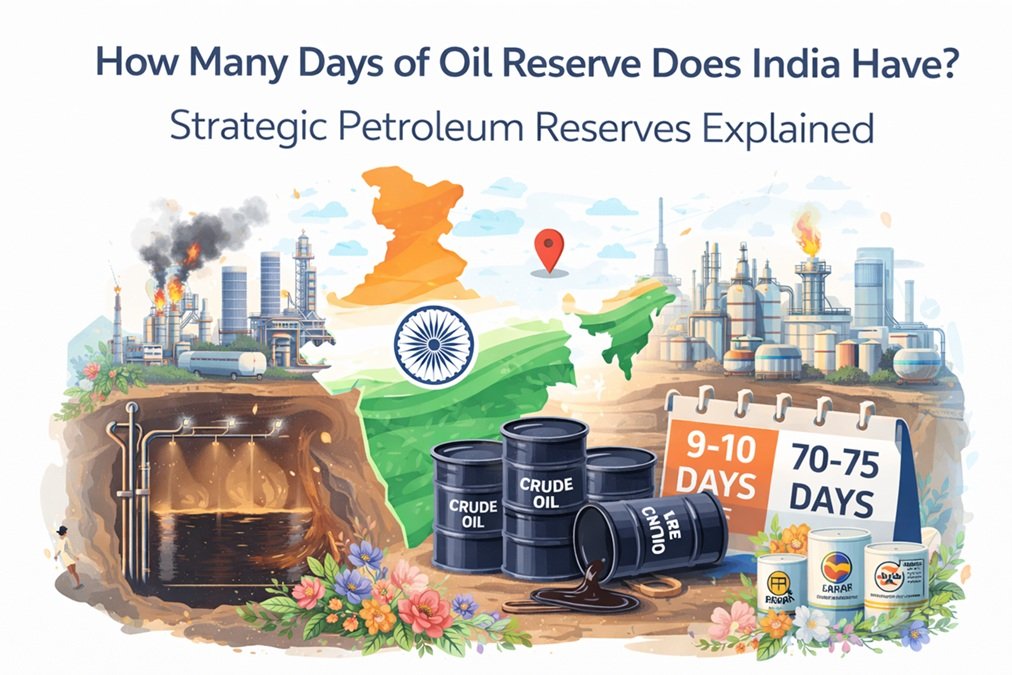
Introduction
Energy security is one of the most important pillars of a nation’s economic and strategic stability. For a rapidly growing economy like India, ensuring uninterrupted access to crude oil is critical. Since India imports nearly 85% of its crude oil requirements, maintaining strategic reserves is essential to protect the country from global supply disruptions, geopolitical conflicts, or sudden price shocks.
To address these risks, India has developed Strategic Petroleum Reserves (SPR) that can supply the country with crude oil during emergencies.
What Is a Strategic Petroleum Reserve?
A Strategic Petroleum Reserve (SPR) is a government-controlled stockpile of crude oil that is stored underground or in specialized facilities. These reserves are meant to be used during emergencies such as:
- global supply disruptions
- geopolitical conflicts
- natural disasters
- sudden spikes in oil prices
Many major economies such as the United States, China, and Japan maintain similar strategic reserves.
India’s SPR program is managed by Indian Strategic Petroleum Reserves Limited (ISPRL) under the Ministry of Petroleum and Natural Gas.
India’s Current Strategic Petroleum Reserve Capacity
India currently maintains about 5.33 million metric tonnes (MMT) of crude oil in its strategic reserves.
These reserves are stored in underground rock caverns at three locations:
- Visakhapatnam (Andhra Pradesh)
- Mangaluru (Karnataka)
- Padur (Karnataka)
According to government estimates, this reserve can meet approximately 9–10 days of India’s crude oil consumption.
Strategic Petroleum Reserve Expansion (Phase II)
India is expanding its SPR capacity to strengthen its energy security.
Under Phase II of the Strategic Petroleum Reserve program, the government plans to add 6.5 million metric tonnes of additional storage capacity.
According to the Press Information Bureau (PIB) of the Government of India:
“The proposed 6.5 MMT of strategic petroleum reserves will provide about 12 days of India’s crude oil requirement.”
Official source:
https://www.pib.gov.in/Pressreleaseshare.aspx?PRID=1694712
New SPR sites proposed include:
- Chandikhol (Odisha)
- Padur Phase II (Karnataka)
Once completed, India’s emergency oil coverage will increase significantly.
Total Oil Reserves Including Commercial Stocks
Apart from government strategic reserves, Indian oil companies such as Indian Oil Corporation (IOCL), Bharat Petroleum (BPCL), and Hindustan Petroleum (HPCL) maintain their own commercial inventories.
When both strategic reserves and commercial stocks are combined, India can sustain its oil demand for roughly:
about 70–75 days
This estimate has been cited in parliamentary discussions and statements by the Ministry of Petroleum and Natural Gas.
Why Oil Reserves Are Important for India
Maintaining adequate oil reserves is crucial for several reasons.
Energy Security
Strategic reserves ensure that India can continue functioning even if global oil supply chains are disrupted.
Protection Against Geopolitical Risks
Conflicts in major oil-producing regions such as the Middle East can impact global supply. Reserves help cushion these shocks.
Economic Stability
Sudden oil shortages can lead to inflation and economic instability. Strategic reserves help stabilize markets during crises.
Emergency Preparedness
In extreme situations such as wars or natural disasters, these reserves allow the country to maintain essential services like transportation, electricity, and industry.
India’s Growing Energy Strategy
India is steadily strengthening its energy security through multiple initiatives:
- expanding strategic petroleum reserves
- diversifying oil import sources
- investing in renewable energy
- increasing domestic exploration
These steps aim to ensure that India remains resilient in the face of global energy challenges.
Conclusion
India currently maintains about 5.33 million metric tonnes of strategic petroleum reserves, which can cover roughly 9–10 days of crude oil consumption. With the addition of 6.5 MMT under Phase II, this coverage will increase further.
When combined with commercial inventories held by oil companies, India’s total oil reserves can sustain the country for approximately 70–75 days during supply disruptions.
As India continues to grow as one of the world’s largest energy consumers, strengthening strategic reserves will remain a key component of the nation’s long-term energy security strategy.