Harshvardhan Mishra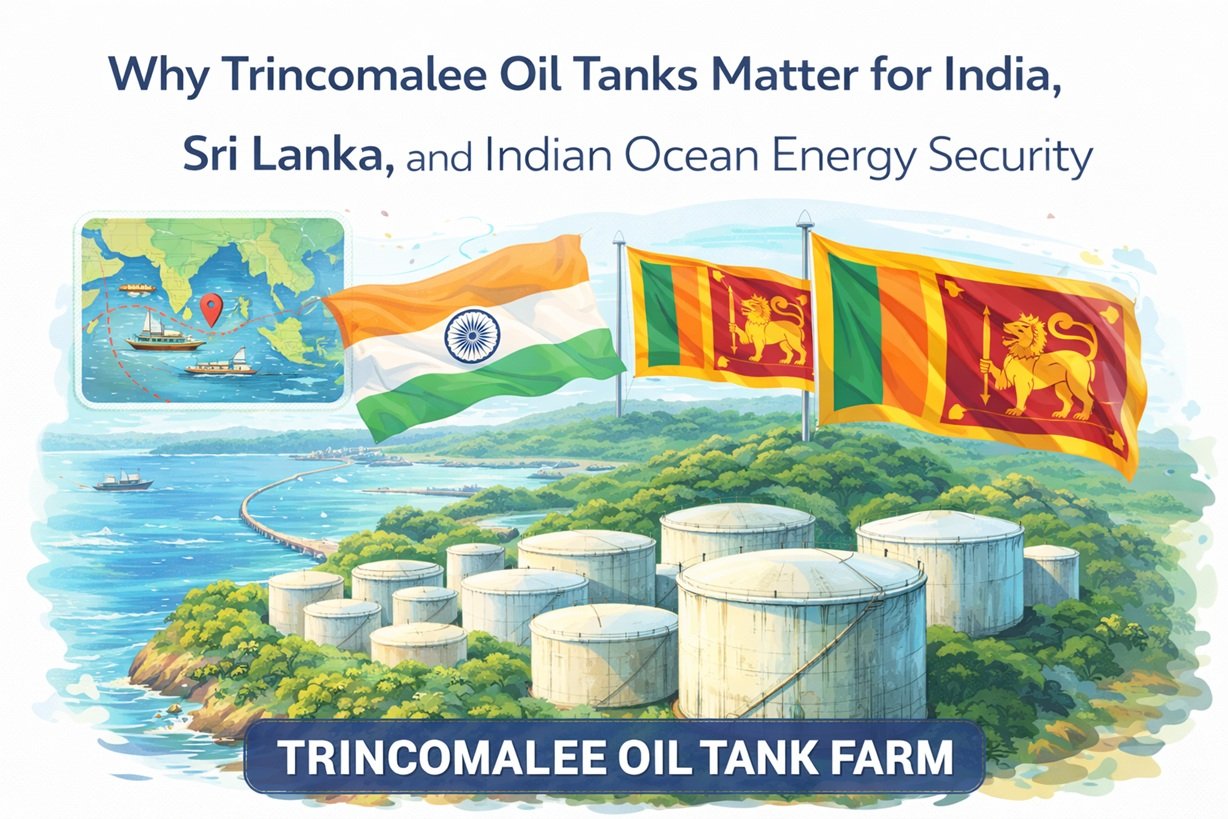
Introduction
Energy security has become one of the most critical strategic concerns for countries across the world. In South Asia, the Trincomalee Oil Tank Farm in Sri Lanka has emerged as a highly significant energy infrastructure asset. Located on the eastern coast of Sri Lanka along one of the world’s busiest maritime routes, the Trincomalee oil tanks hold enormous importance for India, Sri Lanka, and the broader Indian Ocean region.
Originally built during World War II, this massive oil storage complex is now being redeveloped through cooperation between India and Sri Lanka. The project is not only about fuel storage but also about regional energy security, maritime logistics, and geopolitical influence in the Indian Ocean.
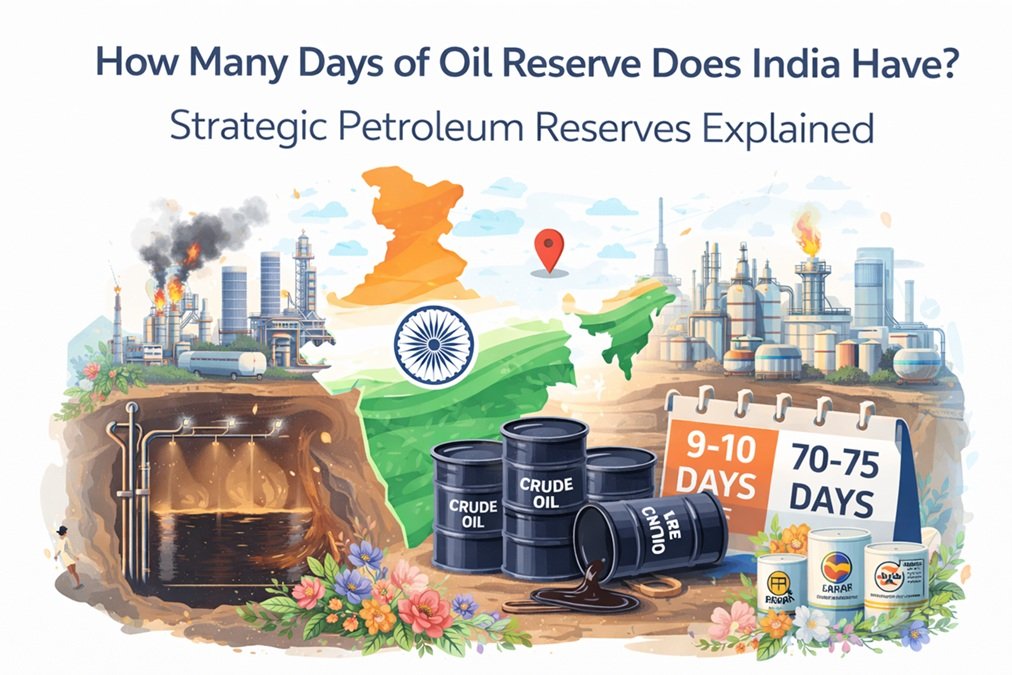
Read This: How Many Days of Oil Reserve Does India Have? Strategic Petroleum Reserves Explained
The History of the Trincomalee Oil Tank Farm
The Trincomalee Oil Tank Farm was constructed by the British during World War II as a strategic fuel storage facility for Allied naval operations in the Indian Ocean.
Key facts about the infrastructure:
- Built between 1938 and 1942
- Contains 99 massive oil storage tanks
- Each tank can store approximately 12,000 kilolitres of fuel
- Located near the natural deep-water harbor of Trincomalee
At the time, the facility was designed to supply fuel to naval fleets operating in the Indian Ocean and Southeast Asia.
After Sri Lanka gained independence, the tanks remained largely unused for decades, with only a few being operational.
Strategic Location in the Indian Ocean
Trincomalee’s importance lies largely in its geographical location.
The port sits very close to one of the world’s busiest maritime shipping lanes, through which a large portion of global oil trade passes.
Every day, hundreds of oil tankers transporting crude oil from:
- the Middle East
- the Persian Gulf
- and Africa
travel through the Indian Ocean sea lanes near Sri Lanka.
Because of this location, Trincomalee has the potential to become a major energy logistics hub for fuel storage, bunkering, and regional distribution.
India–Sri Lanka Cooperation on the Oil Tank Farm
Recognizing the strategic potential of this infrastructure, India and Sri Lanka signed agreements to jointly develop the Trincomalee Oil Tank Farm.
Under the latest agreement:
- 24 tanks will be managed by Sri Lanka’s Ceylon Petroleum Corporation (CPC)
- 14 tanks are operated by Lanka IOC, a subsidiary of Indian Oil Corporation
- 61 tanks will be developed by a joint venture company called Trinco Petroleum Terminal Ltd.
Ownership structure of the joint venture:
- 51% – Ceylon Petroleum Corporation
- 49% – Lanka IOC
This partnership aims to modernize the facility and bring the unused tanks back into operation.
Why the Trincomalee Oil Tanks Matter for India
For India, Trincomalee holds immense strategic value.
Strengthening Energy Security
India imports around 85% of its crude oil, making secure fuel supply chains essential. Having access to storage facilities near major shipping lanes can provide additional flexibility for oil logistics.
Expanding Energy Presence in the Indian Ocean
India’s participation in the Trincomalee project helps strengthen its strategic presence in the Indian Ocean, which is increasingly becoming a key arena for geopolitical competition.
Counterbalancing Strategic Influence
The Indian Ocean region has seen growing influence from global powers, including China. Developing energy infrastructure partnerships with Sri Lanka helps India maintain strong regional ties.
Why the Oil Tanks Are Important for Sri Lanka
For Sri Lanka, the redevelopment of the Trincomalee oil tanks could bring major economic and strategic benefits.
Becoming a Regional Energy Hub
The massive storage capacity could allow Sri Lanka to develop Trincomalee into a regional petroleum storage and distribution hub.
Economic Development
Modernizing the tank farm could attract international energy companies and generate investment, jobs, and infrastructure development.
Strengthening Energy Security
Improved fuel storage capacity would also help Sri Lanka better manage domestic fuel supply during global market disruptions.
Role in Indian Ocean Energy Security
The Indian Ocean is one of the most important regions for global energy trade.
Nearly two-thirds of the world’s oil shipments pass through key sea routes in this region.
Facilities like the Trincomalee Oil Tank Farm can play an important role by providing:
- emergency fuel storage
- maritime bunkering services
- regional energy logistics support
As global energy demand grows, such infrastructure becomes increasingly important for maintaining stable supply chains.
Future Potential of Trincomalee as an Energy Hub
Experts believe the Trincomalee region could evolve into a broader energy and logistics hub in the future.
Possible developments include:
- petroleum refining facilities
- LNG storage and terminals
- fuel bunkering for ships
- petrochemical industries
- regional fuel trading hubs
With proper investment and cooperation, Trincomalee could become one of the most important energy centers in the Indian Ocean.
Conclusion
The Trincomalee Oil Tank Farm is far more than just a fuel storage facility. It represents a strategic asset that could shape the future of energy security in South Asia and the Indian Ocean.
For India, it offers strategic depth and energy logistics support.
For Sri Lanka, it provides an opportunity to become a regional energy hub.
For the Indian Ocean region, it strengthens the infrastructure needed to support global energy trade.
As geopolitical competition intensifies and global energy demand continues to rise, the Trincomalee oil tanks are likely to remain a crucial element in the evolving energy landscape of the region.